
An Aiptasia is a sea anemone that can harm or destroy other living species in the same aquarium. Due to their tentacles that sting corals and their rapid reproduction, they can spread quickly and become invasive. This article summarizes several commonly used methods to stop the invasion.
How to identify an Aiptasia?
Aiptasia, or more commonly known as the “glass anemone” because of its translucent skin, is common in our aquariums. They are small and generally brown or green in color. Aiptasia has tentacles and a mouth at the center and is often considered a pest due to its potential for proliferation.
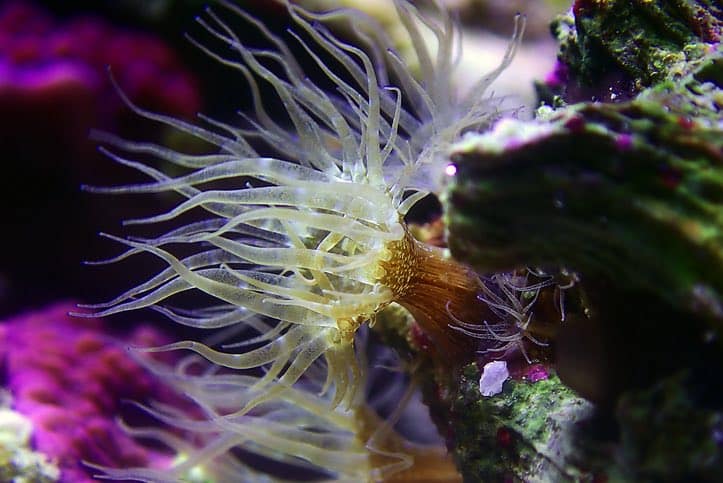
Aiptasia in a reef aquarium
They are generally small and primarily originate from live rocks. They are very aggressive towards other corals. This is why it is recommended to eliminate them as soon as they appear.
Origin and danger
Aiptasia often arrive attached to a live rock, a coral, or any other element from a contaminated aquarium. Since only a very small part of the Aiptasia is needed to reproduce a complete specimen, they are often barely visible.
In a reef aquarium, they can reproduce rapidly through budding or division, which increases the difficulty of stopping their spread.
Not only can they quickly overrun the aquarium, but more importantly:
They release toxins harmful to corals, causing them to be stung.
How to control and eliminate Aiptasia
Controlling the proliferation of Aiptasia in an aquarium can be a challenge, but there are several methods you can try.
This may include the use of natural predators such as certain fish or shrimp, or the direct application of specific chemical products to eliminate them.
Prevention:
To prevent the introduction of Aiptasia into a new aquarium, it is recommended to thoroughly inspect new additions, such as corals and live rocks, to detect the possible presence of these anemones.
If Aiptasia is present on a substrate, scrape the substrate thoroughly and clean it with fresh water. You can then introduce it into the reef aquarium.
Manual removal:
For isolated Aiptasia, you can try to remove them manually by pulling them out or cutting them with special tweezers. Ensure you remove as much of the anemone as possible to prevent regeneration. We naturally advise removing the substrate from the tank where they are attached, as you risk spreading them throughout the aquarium.
In cases where you cannot remove the live rock or coral where the Aiptasia is fixed, you can use a syringe and inject the following products into the center of the mouth (see diagram):
Boiling water injection
The simplest method and safe for the aquarium
White vinegar injection
You can also heat it to optimize its action. The quantity must be carefully controlled because vinegar residues can boost bacteria but also lower the tank’s pH.
Calcium hydroxide or kalkwasser injection
The hydroxide will calcify the polyp’s tissues and thus eradicate it. Adding too much will increase the tank’s pH.
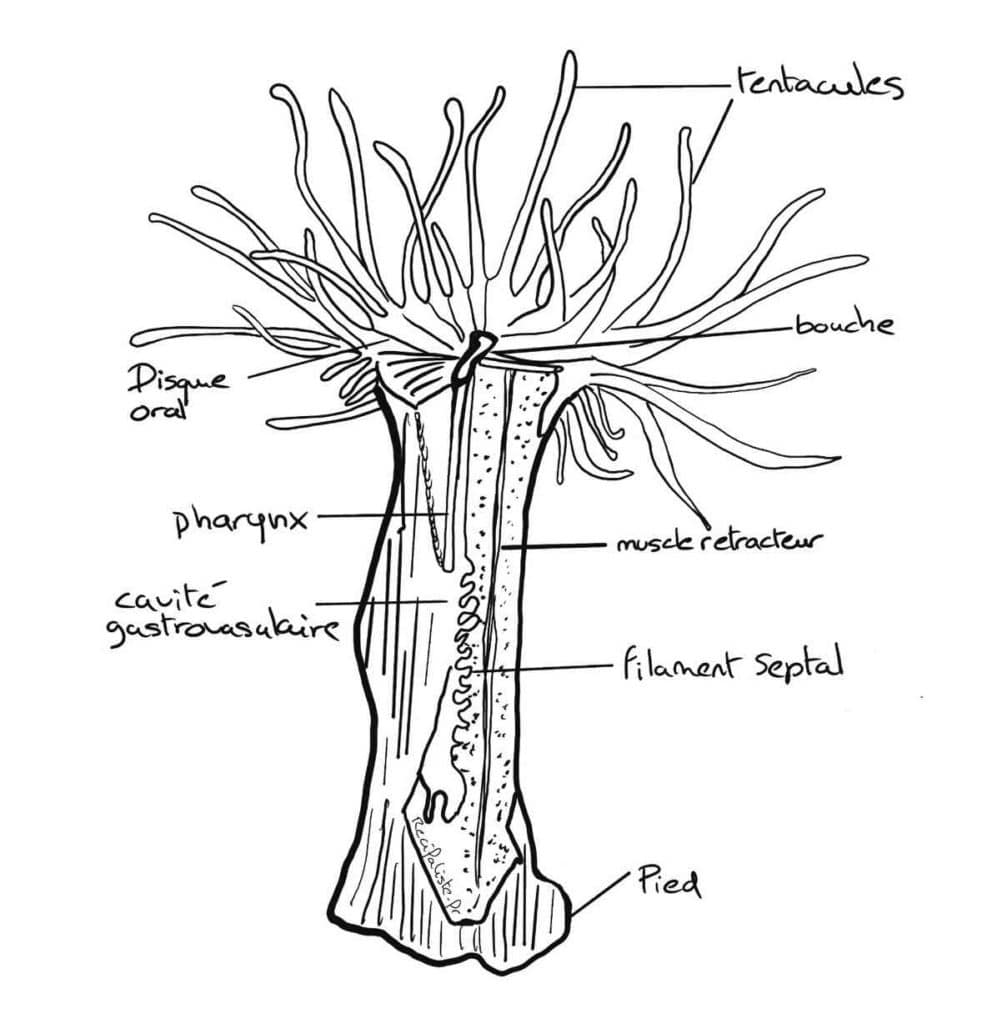
Which fish eat Aiptasia?
The use of natural predators helps combat the proliferation of Aiptasia, and certain fish and/or invertebrates are known to feed on them.
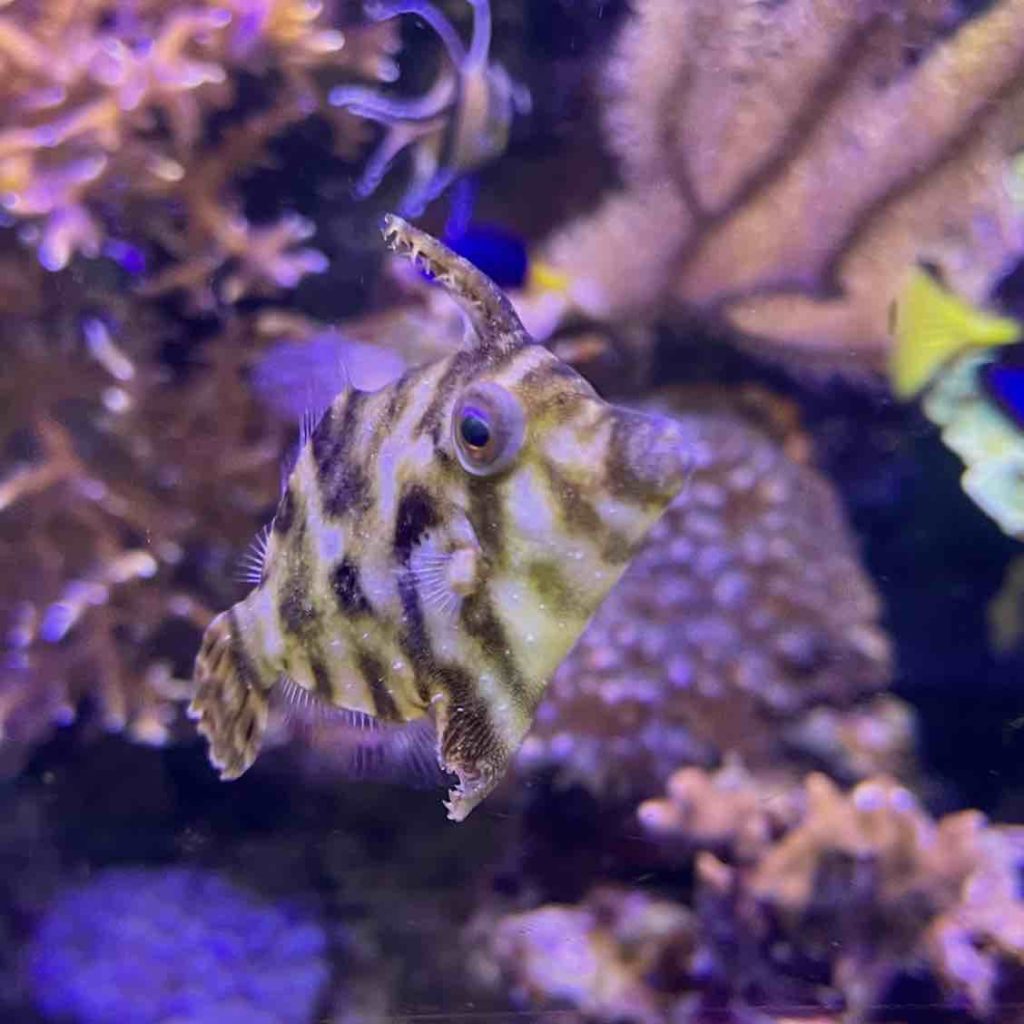
For example, fish species such as butterflyfish (Chaetodon kleinii / Chaetodon lunula and Chelmon rostratus) can be introduced to eat them. We have also observed good results with Acreichthys tomentosus.
Acreichthys tomentosus Aiptasia eater
Acreichthys tomentosus, also known as the “bristle-tail filefish,” is sometimes used in marine aquariums to control Aiptasia populations. However, the effectiveness of this fish can vary from one individual to another, and some may show no interest in Aiptasia.
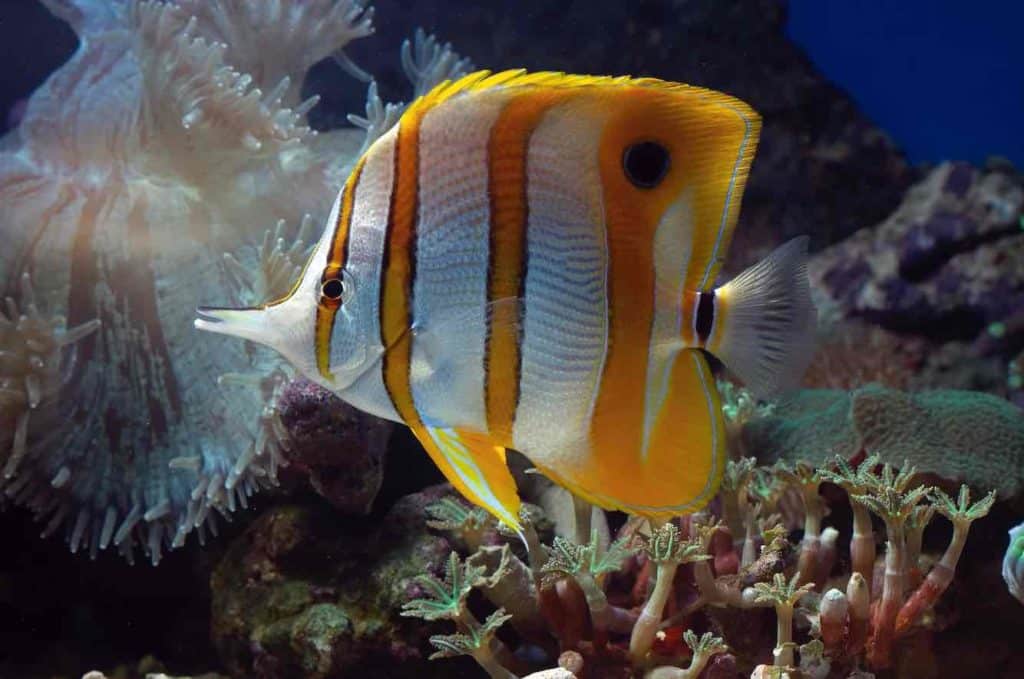
Chelmon rostratus Aiptasia eater
Chelmon rostratus, also known as the copperband butterflyfish, is generally favored in marine aquariology for its beauty and peaceful behavior. It can also be a predator against Aiptasia but may also damage other polyp corals.
Photo credits: Image by kuritafsheen77 on Freepik
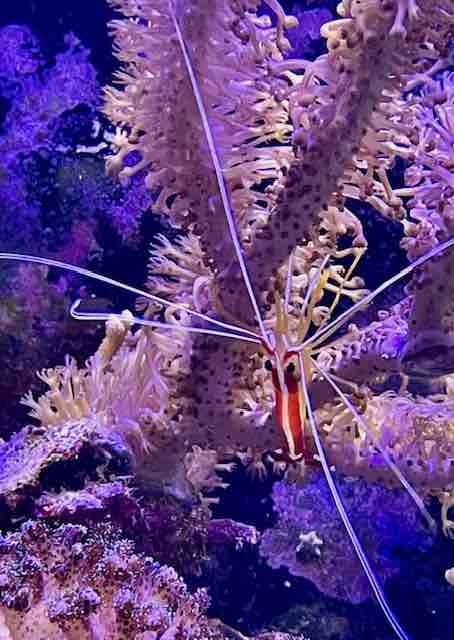
Lysmata wurdemanni shrimp
Invertebrates such as Lysmata wurdemanni or jundalini shrimp are also known to feed on Aiptasia.
Chemical product injection:
Several solutions are available to you when facing this sea anemone. There is a quick way to eliminate them by injecting chemical products. Note that your aquarium must not be too small; otherwise, the chemicals could settle elsewhere, harming the water quality. We therefore recommend natural methods.
There are chemical products on the market specifically formulated to eliminate them. You can use a syringe to inject it directly onto the Aiptasia. Ensure you follow the product instructions carefully to avoid any negative effects on other aquarium residents.
Sodium hydroxide (NaOH) injection
You can use liquid or solid sodium hydroxide (diluted in water). However, care must be taken as sodium hydroxide attacks everything organic. We recommend turning off the circulation pumps to avoid spreading the sodium hydroxide onto other organisms.
Calcium hydroxide or kalkwasser injection
For aquariums equipped with a calcium hydroxide reactor (Nilsen reactor), this method is effective. Kalkwasser must be injected into the mouth, which will calcify the polyp’s tissues and thus destroy the Aiptasia.
Another method is also effective: prepare a milky paste by adding calcium hydroxide to water and heat it in the microwave for a few seconds. By doing this, the paste will become thicker. When injecting the paste onto the glass anemone using a syringe without a needle, the paste adheres particularly well. The anemone will shrink but will be unable to escape the chemicals and will subsequently die.
Hydrochloric acid (HCl) injection
Hydrochloric acid injected into the anemone’s mouth will dissolve the sclerites, which are the small calcareous structures within the Aiptasia’s tissues.
Important: During treatment, always turn off all circulation pumps as well as the return pump to prevent the dispersion of the products used in the aquarium!
Conclusion
In an aquarium, the presence of a few Aiptasia is not dramatic and does not mean there is a maintenance problem. However, you must ensure that the presence of a few polyps does not turn into a colony…

