
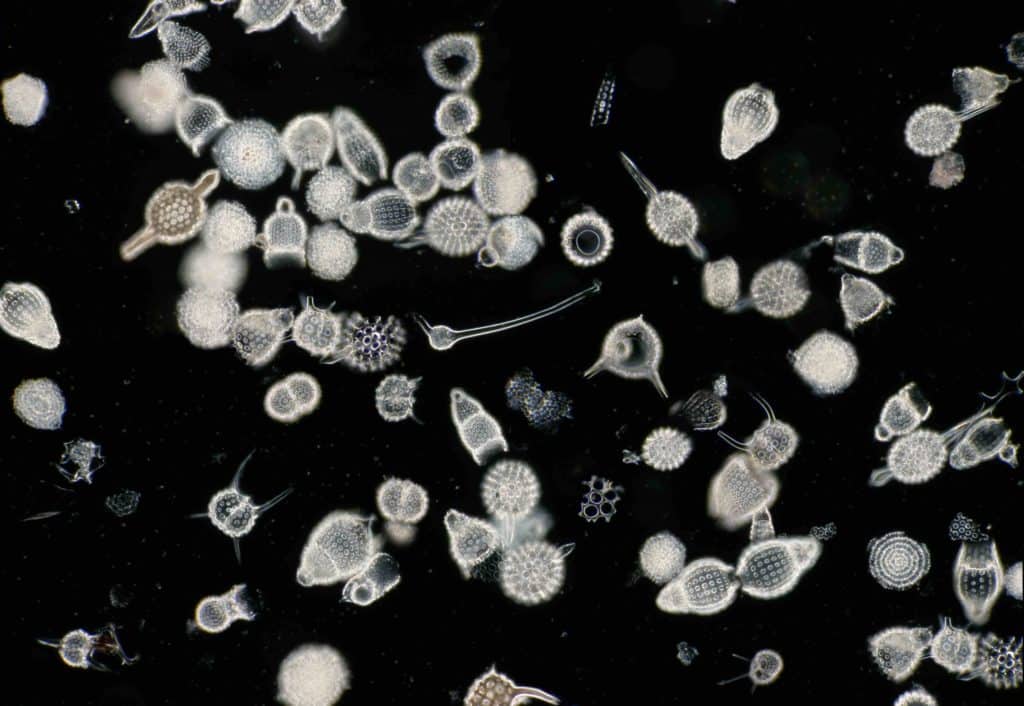
Bacterioplankton, i.e., planktonic marine bacteria, encompasses all bacterial populations present in marine plankton. It is made up of heterotrophic bacteria that feed on organic matter, but it may also include other types of bacteria, such as cyanobacteria (or blue-green algae).
The role of bacterioplankton in a reef aquarium
In a reef aquarium, bacterioplankton plays a vital role in maintaining water quality and biological balance.
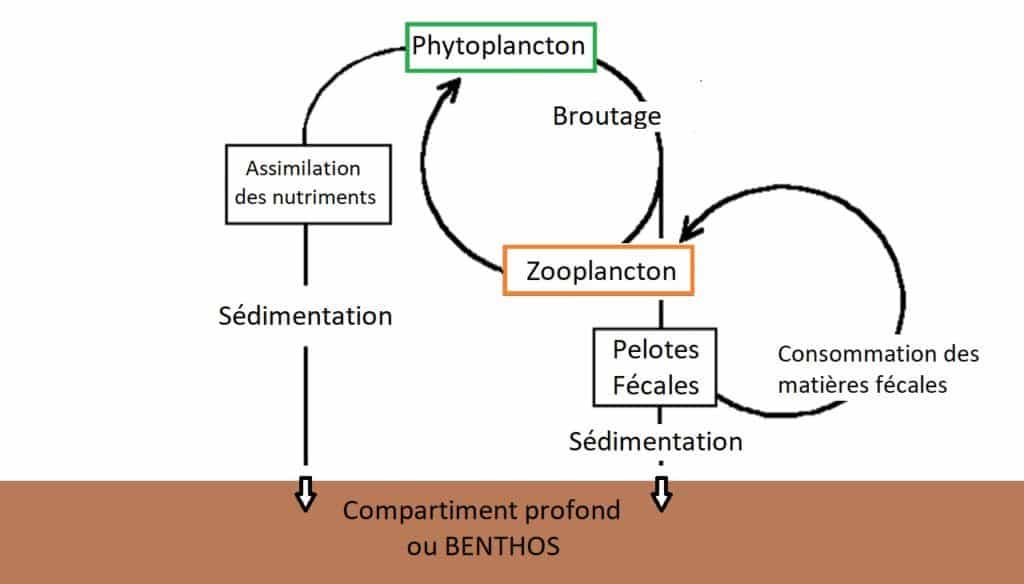
Aerobic and anaerobic marine bacteria are responsible for breaking down organic waste produced by fish, corals, and other living organisms in the aquarium.
They also take part in the nitrogen cycle by converting toxic nitrogenous waste, such as ammonia and nitrites, into less harmful nitrates.
They are mainly found in the benthos: in Berlin-method aquariums, inside live rock and/or seeded rock; and in Jaubert-method aquariums, in the sand.
The nitrogen cycle
Planktonic marine bacteria are essential for breaking down organic waste, such as fish waste, leftover food, and plant debris. They feed on the ammonia produced by this waste and convert it into nitrites. Then other bacteria (Nitrobacter) convert nitrites into nitrates, which are less toxic for the aquarium’s inhabitants and are consumed by macroalgae and soft corals.
Diagram of the nitrogen cycle carried out by bacterioplankton

The benefits of bacterioplankton – reef bacteria
Biological ecosystem balance: Bacterioplankton helps maintain a stable biological balance in the aquarium. By removing toxic substances, it helps create a healthy environment for fish, invertebrates, and corals.
By taking part in the aquarium’s biological cycle, bacterioplankton helps maintain the stability of the ecosystem as a whole.
An imbalance in the bacterial population will lead to an imbalance in chemical levels, which can harm the health of the aquarium.
Feeding: Some species of planktonic marine bacteria are consumed by corals and other filter-feeding organisms in the aquarium. They are therefore an important source of nutrition for these organisms.
Crystal-clear water: An excess of organic matter causes water turbidity and promotes the growth of undesirable algae. Bacterioplankton helps keep the water clear by breaking down these organic substances.
Bacterioplankton is an essential component of a reef aquarium ecosystem, playing a crucial role in maintaining water quality, the health of its inhabitants, and the overall stability of the system.
How do you maintain bacterioplankton?
Maintaining a bacterioplankton population is vital for the balance of a reef aquarium. Here are a few fundamental rules to help you with your day-to-day maintenance:
The filtration system and feeding the aquarium’s inhabitants:
Feed the tank’s inhabitants sparingly and in a balanced way. Be careful not to add an excessive organic load to the aquarium, as this can stress planktonic bacteria and lead to imbalances in the ecosystem.
To support denitrification, using mechanical or biological filtration will promote the growth and survival of bacterioplankton. These systems help remove organic waste and keep the water clean and clear.
To date, there are three types of filtration:
- Biological filtration
- Mechanical filtration
- Chemical filtration
Biological filtration – using a protein skimmer
In a reef aquarium, biological filtration is carried out via rock (live or seeded) and a protein skimmer. The skimmer removes dissolved organic substances in the water, such as proteins, fats, and food waste, before they break down and harm water quality.
Using a protein skimmer is essential when keeping SPS corals and other sensitive organisms.
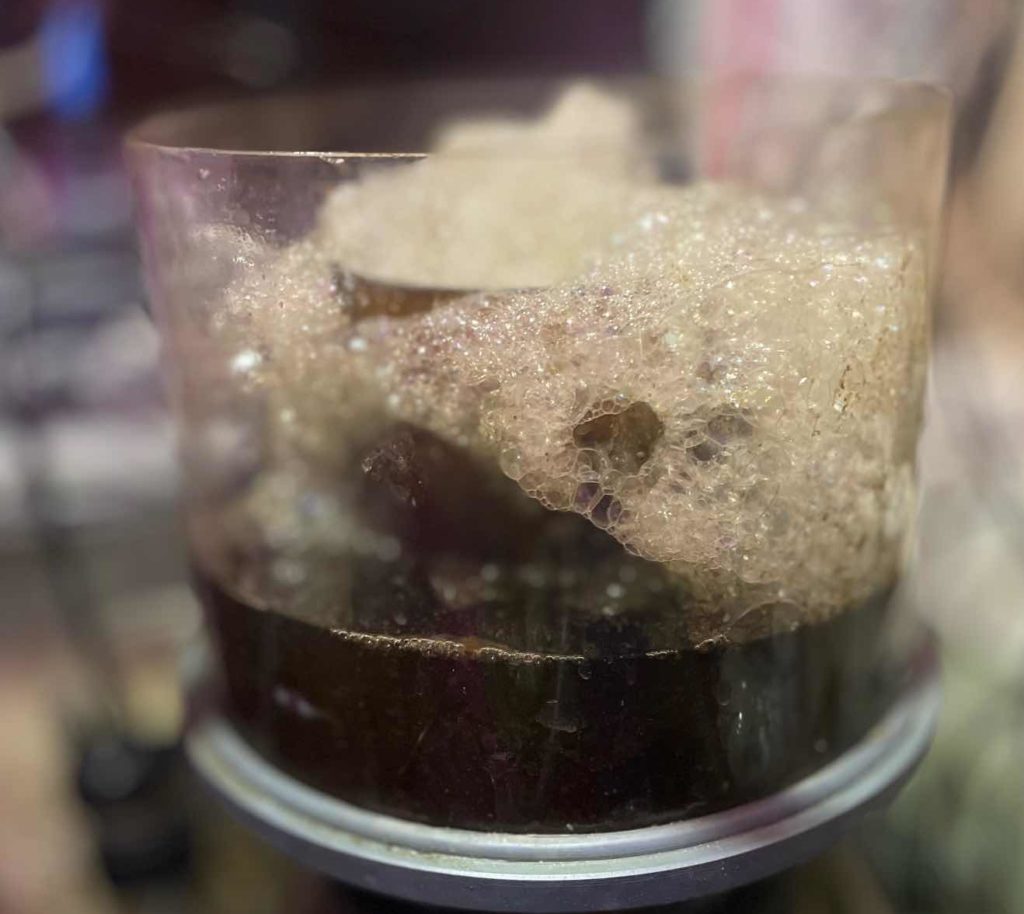
Its operation is based on the principle of sea foam observed along the shoreline. Foam is a white “mousse” formed from albumins and dissolved pollutants. The skimmer creates fine air bubbles to produce foam in a reaction chamber.
Organic substances adhere to the air bubbles and rise to the surface as foam. This foam is then collected in a cup where it can be removed.
Image: Protein skimmer in the sump of a reef aquarium
Biological filtration – algae filter
This is an ideal natural method of biological filtration.
Using an additional aquarium (refugium): In this aquarium, water from the main tank passes through slowly at a very low flow rate before returning to the aquarium. The algae will absorb nutrients, organic matter, and heavy metals, removing them from the aquarium water.
With an algae reactor, the process is identical but easier to use when space is limited. If you do not have the space to set up a large algae filter,
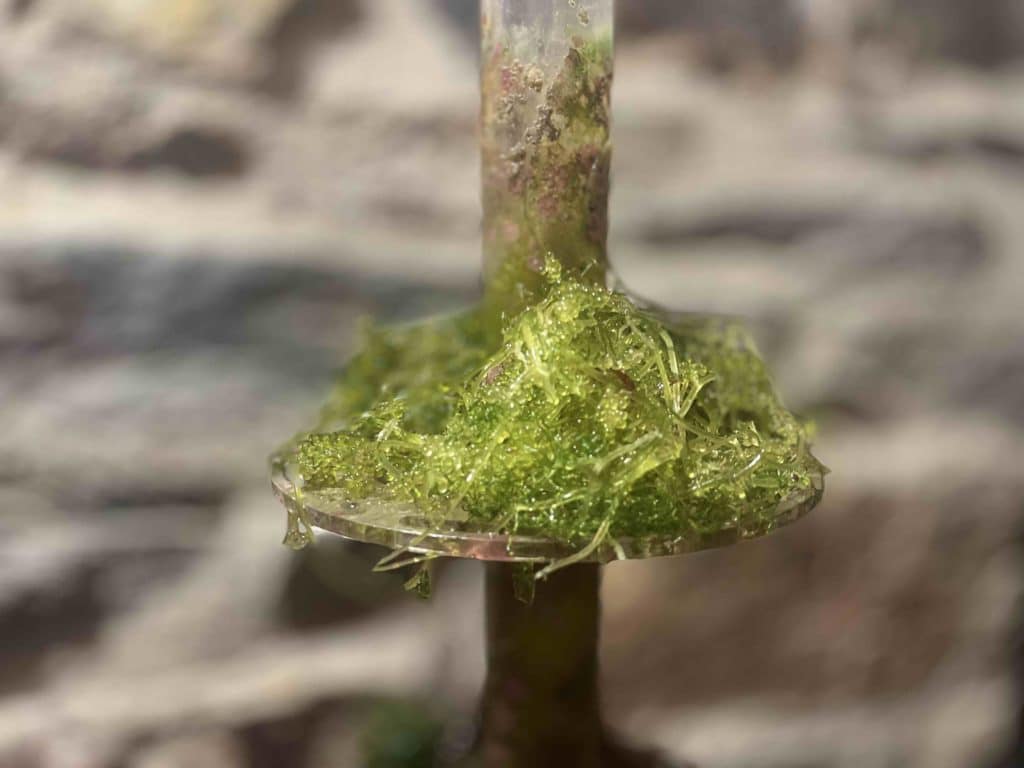
Fast-growing algae are recommended, such as Caulerpa or Chaetomorpha. They will consume the nitrates and phosphates present in the water for their growth, as well as heavy metals.
Removing these nutrients will prevent the proliferation of undesirable algae and will improve water quality.
Image: Mix of Caulerpa lentillifera Small in an algae reactor
Natural maintenance
Adding chemical products, such as treatments against undesirable algae, can kill planktonic bacteria and disrupt the aquarium’s biological balance.
Conversely, adding phytoplankton daily will feed planktonic bacteria and promote the development of a healthy, balanced ecosystem.
Promote stability
Sudden changes in aquarium maintenance, such as changes in temperature, salinity, or KH, can stress planktonic bacteria and reduce their ability to maintain the aquarium’s biological balance.
In summary
We recommend regularly monitoring key chemical levels, such as nitrates and phosphates, as well as water parameters such as temperature, pH, and salinity. This will allow you to quickly detect any imbalance in the aquarium and make the necessary adjustments.
If the ecosystem is unbalanced, adding bacterioplankton will help re-seed your aquarium, and adding phytoplankton will promote the growth and survival of bacterioplankton in your reef aquarium, helping to maintain a healthy, balanced ecosystem.

