
What is marine plankton?
Plankton refers to all living organisms that drift in the water and cannot swim against currents. In the ocean, it forms the base of the food chain and plays a fundamental role in the balance of marine ecosystems.
In a reef aquarium, replicating this natural food chain is essential to keep corals healthy and promote a stable ecosystem.
Plankton is mainly divided into two broad categories:
- phytoplankton
- zooplankton
These two forms of plankton are closely linked and contribute to the development of the aquarium’s microfauna.
Phytoplankton in the reef aquarium
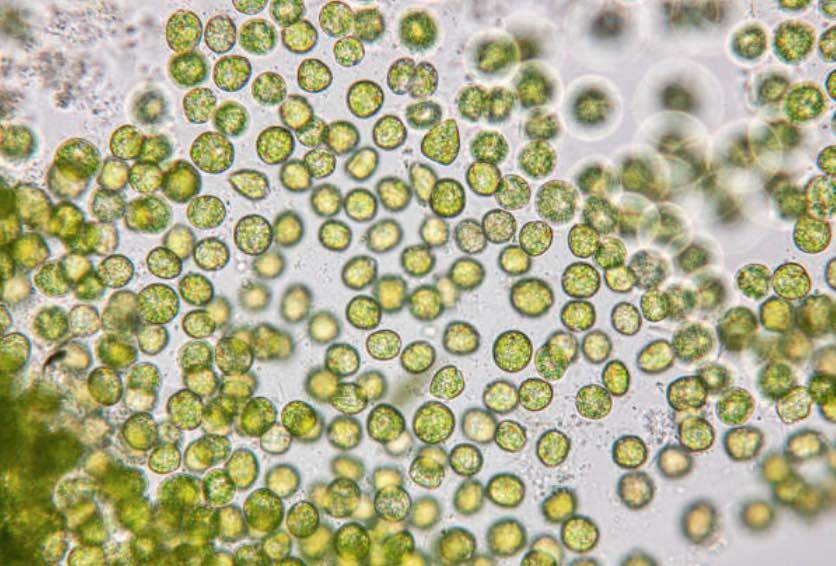
Phytoplankton consists of microscopic microalgae capable of photosynthesis. It is often referred to as plant plankton.
In the reef aquarium, it plays several essential roles:
- food for zooplankton
- microfauna development
- support for the biological cycle
- nutritional input for certain cora
Phytoplankton is particularly useful for feeding:
- copepods
- rotifers
- benthic microfauna
👉 See also:
Phytoplankton in the reef aquarium
Zooplankton in the reef aquarium
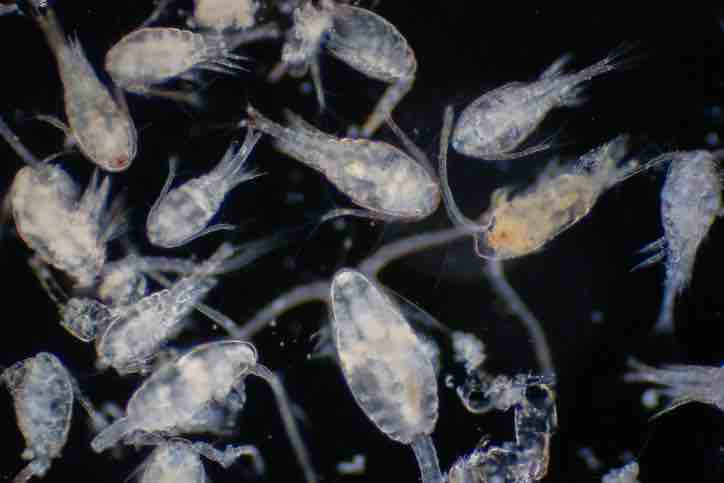
Zooplankton corresponds to animal plankton. It includes a wide variety of microscopic or small organisms that serve as food for many reef inhabitants.
In a reef aquarium, zooplankton helps feed:
- LPS corals
- certain SPS corals
- planktivorous fish
- filter-feeding organisms
It is also a key element of the tank’s biological balance.
👉 See also:
Zooplankton in the reef aquarium
Copepods: the foundation of reef microfauna
Copepods are small crustaceans naturally found in coral reefs. They are an essential food source for many fish and invertebrates.
In the reef aquarium, they contribute to:

- recycling organic matter
- the food chain
- ecosystem balance
They are also indispensable for certain specialized fish such as the mandarin (Synchiropus splendidus).
👉 See also:
Copepods in the reef aquarium
Rotifers in reef aquariums
Rotifers are tiny planktonic organisms widely used in aquaculture and reef aquariums.
They are particularly useful for:

- feeding fish larvae
- feeding filter-feeding corals
- supporting microfauna development
Thanks to their small size, they provide a very fine food suitable for many marine organisms.
👉 See also:
Rotifers in the reef aquarium
Microfauna and the tank’s biological balance
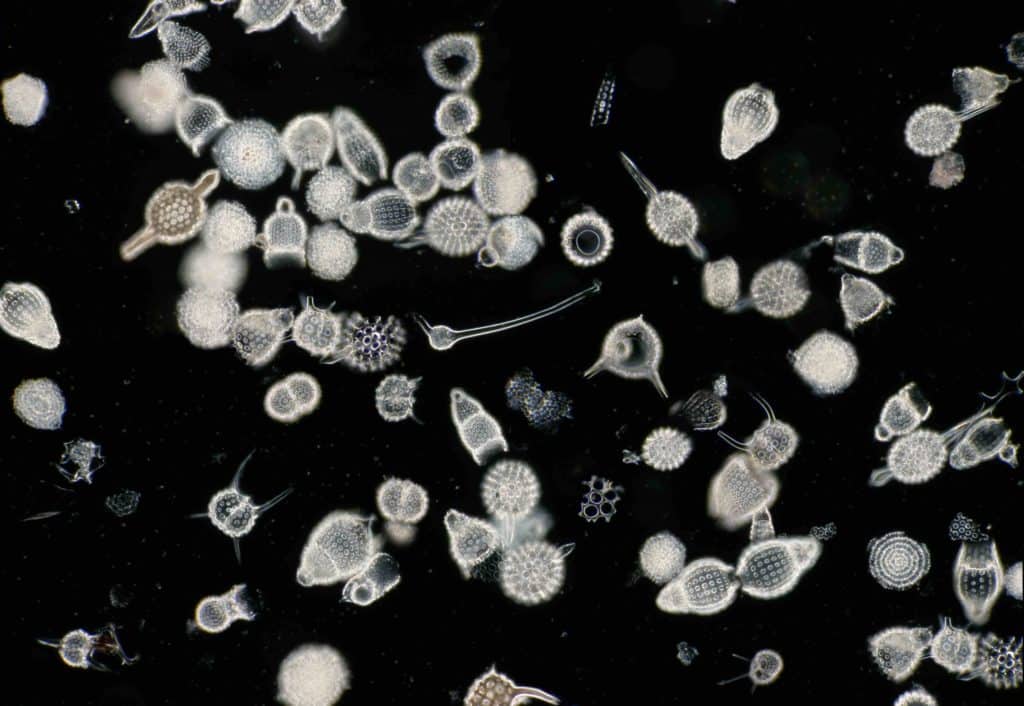
Microfauna includes all the small organisms that live in the reef aquarium:
- copepods
- amphipods
- worms
- micro-crustaceans
- bacteria
It plays a major role in:
- waste breakdown
- nutrient recycling
- the tank inhabitants’ natural diet
An aquarium rich in microfauna is often more stable and closer to a natural ecosystem.
👉 See also:
Microfauna in the reef aquarium
How to develop plankton in a reef aquarium
To encourage the presence of plankton and microfauna in the reef aquarium, several factors are important:
- good water quality
- refuge areas (rocks, refugium)
- regular addition of phytoplankton
- appropriate lighting
- a natural diet
Introducing live cultures of phytoplankton and zooplankton can help enrich the ecosystem and support the food chain.
Conclusion
Plankton plays a fundamental role in how a reef aquarium functions. By replicating the natural interactions between phytoplankton, zooplankton, and microfauna, it is possible to create an environment that is more stable and closer to natural reefs.
Understanding these mechanisms helps improve coral health, naturally feed the tank’s inhabitants, and maintain a balanced reef aquarium over the long term.